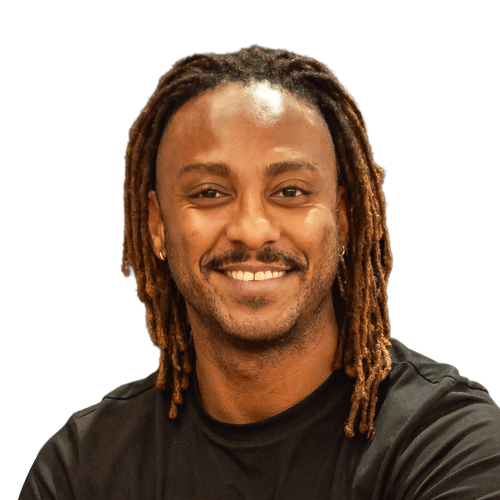
Alberto Pereira Jr
Journalist, director, TV presenter and actor, Brazi
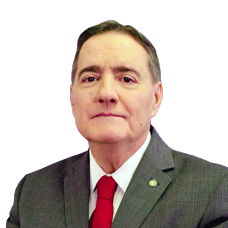
Alberto Pereira Jr is a Brazilian journalist, director, TV presenter and actor with more than 15 years of experience in television, streaming and digital media. He creates and directs entertainment formats, including variety shows, documentaries, reality TV, factual productions and advertising, combining editorial storytelling with a strong connection to contemporary Brazilian culture. Alberto is also the founder of Domingo Ela Não Vai, one of São Paulo’s largest and most traditional Carnival street groups. A Black gay man living with HIV for over 16 years, he has long used his work and public platforms to foster conversations about race, LGBTQ+ rights, representation and HIV and AIDS in Brazil.
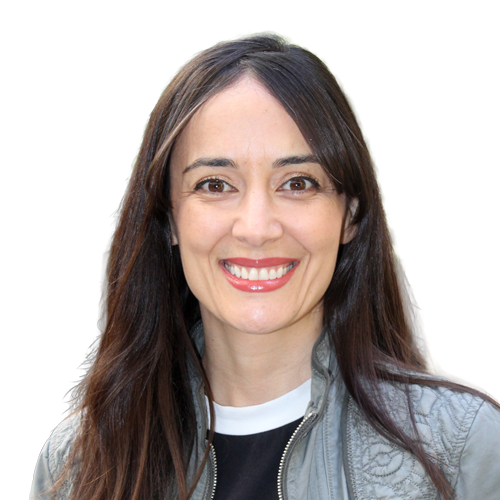
Alexus D'Marco
The United Caribbean Trans Network (UCTRANS), The Bahamas
Alexus D’Marco is a social justice and human rights defender from The Bahamas, currently serving as Executive Director of United Caribbean Trans network (UCTrans), which she helped build into a reference regional trans group. Alexus completed gender studies at the University of the West Indies and is an intersectional advocate, focused on the Caribbean region and the defence of human rights of marginalized groups, including trans and LGBI people, women, young people and people living with and affected by HIV and AIDS. Alexus is the founder and CEO of the D M A R C O Foundation (Dreams Manifested Around Restoration, Change and Opportunity), focused on the protection of LGBTI people in the Bahamas, where she lives. She has also served as the Caribbean Coordinator for REDLACTrans, a trans women’s advocacy network in Latin America and the Caribbean.
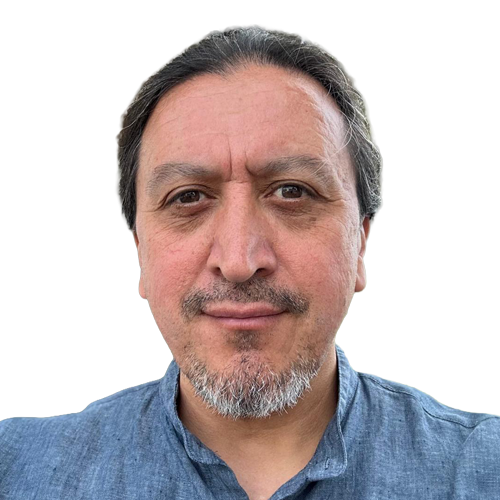
Amanita Calderón-Cifuéntes
Trans Europe and Central Asia (TGEU), Germany
Paulie Amanita Calderón-Cifuéntes is a Colombian scientist and trans activist with over 20 years of experience in molecular biomedicine, focusing on infectious diseases and sexual and reproductive health and rights (SRHR) of trans people. As a migrant, sex worker, person who uses drugs and person openly living with HIV, she integrates lived experience with scientific expertise to advance rights-based, community-led health responses. Amanita has collaborated with Gilead Sciences and served on ViiV/GSK’s Advisory Board. She has worked with UN and EU agencies, including ECDC, FRA, WHO and UNODC, contributing community-informed perspectives to HIV strategies and public health policy. She currently serves as HIV Research and Advocacy Officer at TGEU, where she leads intersectional SRHR research and policy advocacy. Since January 2025, she has represented TGEU as one of two NGO Delegates for Europe on the UNAIDS Programme Coordinating Board, championing inclusive and community-led global health governance.
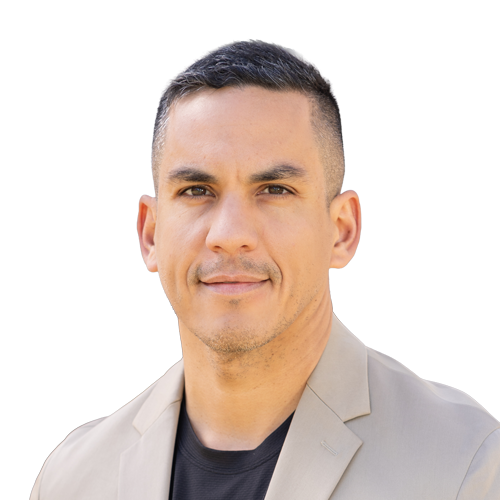
Báltica Cabieses
Universidad del Desarrollo, Chile
Báltica Cabieses is Professor of Social Epidemiology at Universidad del Desarrollo in Chile. She is a nurse-midwife with a Master’s in epidemiology and a PhD in health sciences. Báltica has been a senior visiting scholar at the University of York since 2011. She is a co-founder, former co-leader and board member of the Lancet Migration Latin American hub and founder of the Chilean research network on health and migration, RECHISAM. Báltica was the Director of the WHO/PAHO Collaborating Centre on Capacity Building for the Health of Migrants and Refugees in Chile from 2024 to 2028. She consults for organizations such as WHO and PAHO on health equity, health of migrants, implementation science research and action in diverse communities. Báltica serves on the Board of the International Network for Research on Inequalities in Chile Health. She has edited 10 academic books and participated in over 70 research projects in Chile and abroad.
E. Roberto Orellana
The Abya Yala Indigenous Health Research Center, University of Washington, United States
E. Roberto Orellana
The Abya Yala Indigenous Health Research Center, University of Washington, United States
E. Roberto Orellana was born and raised in Guatemala’s highlands, but had to leave his country due to political and structural violence that continues. He is now a Professor at the University of Washington (UW) and an Indigenous health scientist trained in psychology, social welfare and public health. His research focuses on HIV-related stigma reduction, Indigenous health equity and community‑driven interventions across the Americas. He has partnered with Indigenous communities in Peru, Guatemala and the US and on the Mexico-Guatemala border to develop interventions addressing racism, stigma, discrimination and other structural drivers of HIV and health. He has directed large biobehavioural surveillance efforts, leads the Health Access Scientific Working Group at UW’s Center for AIDS Research, and is principal investigator of KABAWIL, a stigma reduction intervention for Indigenous Peoples in Guatemala. He mentors Indigenous and minoritized scholars, and his work emphasizes culturally grounded research, Indigenous leadership and development of effective, community-centred HIV prevention strategies.
Francisco Ruiz
Public health leader, United StateS
Francisco Ruiz is a public health leader, strategist and practitioner-scholar with more than 20 years of experience advancing HIV policy, health equity and systems change across the United States and Latin America. He previously served as Director of the White House Office of National AIDS Policy, where he led implementation of the U.S. National HIV/AIDS Strategy and coordinated HIV policy across federal agencies. Prior to the White House, he held senior leadership roles at the U.S. Centers for Disease Control and Prevention, helping shape national HIV prevention strategy and supporting responses to COVID-19 and Zika. Earlier in his career, he worked with communities in Ecuador and the Dominican Republic. He is Founder and Principal of Adelante Strategy Group, where he advises organizations on strategy, leadership and systems transformation. He earned his Doctor of Public Health from the Harvard T.H. Chan School of Public Health.
Immaculate Owomugisha Bazare
Centre for Women Justice Uganda (CWJU), Uganda
Immaculate Owomugisha Bazare is a Ugandan social justice lawyer. She is the Executive Director of the CWJU, leading strategic litigation, advocacy and movement building to advance HIV justice, SRHR and the rights of women, girls and key populations. She serves on multiple regional and global governance bodies, including the Uganda Country Coordinating Mechanism for the Global Fund, the International Community of Women Living with HIV, the HIV Justice Network, the AIDS Rights Alliance of Southern Africa, and the Board of Trustees of the Uganda Key Populations Consortium. She is a member of a range of other bodies, including the UNAIDS HIV and Human Rights Reference Group, the WHO Global Validation Advisory Committee, the Unitaid Communities Delegation, and the Uganda AIDS Commission Technical Working Group on Stigma and Discrimination. Immaculate has led and contributed to precedent-setting litigation in Uganda, challenging HIV criminalization, stigma, discrimination and gender-based violence.
Izukanji Sikazwe
Global Fund, Switzerland
Izukanji Sikazwe is a Zambian infectious disease physician, HIV programme implementation leader and clinical researcher. A graduate of the University of Zambia School of Medicine, she further specialized through an internal medicine residency at Good Samaritan Hospital and an infectious disease fellowship at the University of Maryland. She holds a Master of Public Health from Michigan State University and is an alumna of the Africa CDC Kofi Annan Global Public Health Leadership Program. As a principal investigator for PEPFAR-funded HIV prevention, care and treatment programmes in Zambia, Izukanji spearheaded the scale up of life-saving interventions across public health facilities, transitioning direct service delivery to the Ministry of Health. Her research focuses on improving health outcomes for people living with HIV, with contributions to retention strategies, differentiated service delivery models and person-centred care that have informed global HIV guidelines. Izukanji is currently the Head of HIV at the Global Fund.
Jarbas Barbosa da Silva Jr
Pan American Health Organization (PAHO), United States
Jarbas Barbosa da Silva Jr of Brazil was elected Director of PAHO by its Member States in 2022 and began his five-year term in February 2023. From 2017 to 2023, as PAHO’s Assistant Director, he oversaw the organization’s technical departments and its Revolving Fund. In this role, he led PAHO’s support to Member States during the COVID-19 pandemic, helping coordinate the regional response and serving as one of PAHO’s principal spokespersons. Previously, he held several senior leadership positions in Brazil’s National Health System, including Vice Minister of Health Surveillance, Vice Minister for Science and Technology, Executive Secretary (Deputy Minister) of the Ministry of Health, and President of ANVISA, Brazil’s national health regulatory authority. He has received numerous distinctions, is an honorary member of the Brazilian National Academy of Medicine and an International Member of the U.S. National Academy of Medicine. He has authored many publications on public and global health.
Javier Padilla Bernáldez
Secretary of State of Health, Spain
Javier Padilla Bernáldez is a family and community physician with a background in health economics, public health and philosophy. Since November 2023, he has served as Spain’s Secretary of State for Health. He is the author of several popular books on health and healthcare. He holds a medical degree from Universidad Autónoma de Madrid, and has Master’s degrees in public health and health management, health economics and medicine, and philosophy for contemporary challenges.
Jean Vinicius
Brazilian Interdisciplinary AIDS Association (ABIA), Brazil
Jean Vinicius is a social scientist who graduated from the Federal Fluminense University and a Master’s student in language and culture at the Federal University of Bahia. He actively works as a researcher and activist, affiliated with the Brazilian Interdisciplinary AIDS Association and serves as a member of both the Commission for Articulation with Social Movements and the Unified Black Movement (LGBTI+ Collective). Jean’s work focuses on the interdisciplinary investigation of the intersections between society and language, with an emphasis on race, ethnicity, sexuality and health processes. He dedicates his life to working with Black and LGBTI+ adolescents and young people, with solid experience in HIV, AIDS and tuberculosis prevention in the prison system, favelas and contexts of extreme poverty.
Lishomwa (Lish) Ndhlovu
Weill Cornell Medicine, United States
Lish Ndhlovu is the Herbert J. and Ann L. Siegel Distinguished Professor of Medicine at Weill Cornell Medicine. He researches HIV and ageing and pioneering strategies to prevent, slow or eliminate complications associated with HIV. Combining immunology, virology and epigenetic methods, he explores molecular mechanisms of HIV pathogenesis and persistence. He co-leads the Martin Delaney Collaboratories for HIV Cure Research, specifically, the HOPE Collabatory, and received an NIH MERIT award for his research on stem cell transplantation leading to HIV cure. He leads the NIDA-funded Weill Cornell-SCORCH consortium, documenting single-cell substance use disorder responses in the brain in the setting of HIV. He is a member of the NIAID Office of AIDS Research Advisory Committee and Co-Editor in Chief of AIDS Research and Human Retroviruses. He was elected as a Fellow of the American Academy of Microbiology in 2021 and a member of the American Association of Physicians in 2025.
Lloyd Mulenga
Ministry of Health, University of Zambia and University Teaching Hospital, Zambia
Lloyd Mulenga
Ministry of Health, University of Zambia and University Teaching Hospital, Zambia
Lloyd B Mulenga is an internal medicine and infectious diseases physician who serves as Director of the Infectious Diseases for the Zambia Ministry of Health. He is Professor of Infectious Diseases and affiliated with the University of Zambia School of Medicine, Lusaka. He practices at the University Teaching Hospital. He serves on various international and local boards. His recent focus has been on improving health outcomes through digital health systems, including digital health information systems. His research focuses on: HIV prevention and clinical outcomes; HIV drug resistance; HIV and non-communicable diseases (kidney, cardiovascular diseases and diabetes); and infectious diseases epidemiology and clinical outcomes. He has authored several publications in peer-reviewed journals on these subjects.
Mathume Joseph “Joe” Phaahla
Deputy Minister of Health, South Africa
Joe Phaahla is South Africa’s Deputy Minister of Health. He previously served as Minister of Health, Deputy Minister of Rural Development and Land Reform, and Deputy Minister of Arts and Culture. He also served as CEO of the South African Sports Commission and Director General of Sport. At the provincial government level, his positions have included Limpopo Member of Executive Council (MEC) of Health and MEC of Education, Sports and Culture. Before taking political office in 1994, he worked as a medical officer in several hospitals; he qualified as a medical doctor in 1983. An anti-apartheid activist from his youth days, he was elected to leadership positions in organizations such as the United Democratic Front and the National Medical and Dental Association. He served as Limpopo’s Deputy Provincial Chairperson for the African National Congress (ANC) from 1992 to 1998, and today, is a member of the ANC’s National Executive Committee.
Michel C Nussenzweig
Rockefeller University, United States
Michel C Nussenzweig is the Zanvil A. Cohn and Ralph M. Steinman Professor, Investigator of the Howard Hughes Medical Institute, and Senior Physician at The Rockefeller University. His laboratory studies the molecular mechanisms of adaptive and innate immunity, leading to innovative vaccines against infectious diseases and new therapies for autoimmune disorders.
A Rockefeller alumnus, Michel earned his PhD with Ralph Steinman, defining how dendritic cells initiate and regulate immune responses. His later work uncovered key mechanisms of B cell development and tolerance, showing that most new B cells are self-reactive and identifying checkpoints that prevent autoimmunity. He is Editor and Chair of the Journal of Experimental Medicine, Director of the Christopher H. Browne Center for Immunology and Co-Director of the Stavros Niarchos Foundation Institute for Global Infectious Disease Research. His honours include the Robert Koch Prize and election to the U.S. National Academy of Sciences.
Oni Blackstock
Health Justice, United States
Oni Blackstock, MD, MHS, is a primary care and HIV physician, researcher and public health leader whose career centres on the principle that communities most affected by health inequities should lead decision making about solutions. She is the founder and Executive Director of Health Justice, a social impact consulting and research organization, where she also leads the Grounded Innovation Lab, developing community-centred frameworks for governing health AI systems. As Assistant Commissioner at the New York City Department of Health and Mental Hygiene, she led the Bureau of HIV, overseeing initiatives that contributed to a record low in new HIV diagnoses citywide. Her prior research at Montefiore/Albert Einstein College of Medicine tested NIH- and CDC-funded interventions to improve HIV prevention and treatment engagement for disproportionately impacted communities. She holds degrees from Harvard College, Harvard Medical School and the Yale/RWJF Clinical Scholars Program.
Paula Mendes Luz
Fundação Oswaldo Cruz (Fiocruz), Brazil
Paula Mendes Luz is a researcher and Professor at Fiocruz’s Instituto Nacional de Infectologia Evandro Chagas and Escola Nacional de Saúde Pública Sergio Arouca, advising Master’s and PhD students. She holds an MD from Fluminense Federal University (2002) and a PhD in epidemiology from Yale University (2009), funded by a Fulbright and CAPES Joint Scholarship. She has been awarded multiple Research Productivity Awards by the Brazilian National Research Council and the State of Rio de Janeiro Research Support Foundation. Her research interests include epidemiology, mathematical and statistical modelling of disease dynamics, health technology assessment and decision analysis. Her recent work integrates epidemiological and modelling approaches to analyse the influence of psychological, interpersonal and social determinants of health on HIV prevention, treatment and care continuum outcomes.
Raphael Landovitz
University of California, Los Angeles (UCLA), United States
Raphael J Landovitz is a Professor of Medicine and the Mary D. Fisher Endowed Chair in HIV Care, Treatment, and Prevention at the David Geffen School of Medicine. He is Chief of the Division of Infectious Diseases and serves as Director of both the UCLA Center for Clinical AIDS Research & Education and the UCLA Center for HIV Identification, Prevention, and Treatment Services. Raphael is also a principal investigator of the HIV Prevention Trials Network (HPTN) and the UCLA AIDS Prevention and Treatment Clinical Trials Unit. His research focuses on optimizing antiretroviral therapies for HIV treatment and prevention, with current efforts centred on the development and implementation of long-acting PrEP agents and continued evaluation of investigational long-acting and extended-release products and delivery systems for HIV and STI prevention.
Sandhya Vasan
U.S. Military HIV Research Program/HJF, United States
Sandhya Vasan is the Chief Medical and Science Officer at the Henry M. Jackson Foundation for the Advancement of Military Medicine. She also serves as Senior Vice President of HJF’s Global Infectious Diseases portfolio, leading a longstanding collaboration with the U.S. Military HIV Research Program at the Walter Reed Army Institute of Research (WRAIR). Sandhya studied mechanical engineering at the Massachusetts Institute of Technology and completed her MD at the Harvard-MIT Division of Health Sciences and Technology at Harvard Medical School and a residency in paediatrics at Johns Hopkins University. Sandhya worked at the Communicable Disease Centre and National University of Singapore and conducted research on HIV vaccines, therapies and adjuvants at the Aaron Diamond AIDS Research Center and The Rockefeller University in New York. She leads an array of basic and clinical studies, oversees staff at clinical research sites in Africa, the Middle East and Asia, and is the principal investigator on grant awards from the U.S. Department of Defense and NIH.
Sanjay Pujari
Institute of Infectious Diseases, India
Sanjay Pujari is a physician specializing in internal medicine and infectious diseases and serves as Founder-Director at the Institute of Infectious Diseases in Pune, India. He began working in HIV care as a medical student, establishing early awareness and counselling initiatives. He currently provides care to more than 6,000 people living with HIV. His site is part of the TREAT Asia network and the TAHOD cohort, collaborating on research, education and policy initiatives in the Asia-Pacific region. His research focuses on optimizing antiretroviral therapy, managing opportunistic infections, including tuberculosis, and evaluating effectiveness and safety of generic FDC ART. He has contributed to WHO consultations, served on the ICMR National Task Force on COVID-19, and is long-time faculty at the EACS HIV Summer School. He also conceived and produced U=Me, an award-winning short film promoting U=U and seeks to shift community attitudes to help mitigate stigma and discrimination.
Wame Jallow
Shuga Global, Botswana
Wame Jallow is a global advocate for health, rights and environmental justice, with over 25 years of experience in driving transformative change across diverse communities. She has been a fierce champion for the rights of women and girls, working to ensure equitable access to quality health services and essential medicines for all. She has played a pivotal role in strengthening community and health systems, bringing expertise in community-led monitoring and research, costing and policy analysis, advocacy, social behaviour change and impact, and community mobilization. Wame is the Executive Director of Shuga Global (formerly – MTV Staying Alive Foundation), which leads innovative entertainment-education initiatives that harness the power of storytelling and popular culture to challenge stigma, shift social norms and inspire collective action globally. Its flagship series, MTV Shuga, is a cultural touchstone and movement tackling critical issues that shape the lives and futures of young people.
Winnie Byanyima
United Nations Joint Programme on HIV/AIDS (UNAIDS), Switzerland
Winnie Byanyima is the Executive Director of UNAIDS and an Under-Secretary-General of the United Nations. A passionate and longstanding champion for social justice, she leads the United Nations’ efforts to end the AIDS pandemic by 2030. She believes that healthcare is a human right, and she is the co-founder and co-chair of the People’s Medicines Alliance, advocating for equitable access to medical technologies that help prevent and respond to current and future pandemics. Previously, she has served as the Executive Director of Oxfam International and as a member of parliament for her country, Uganda. She has been deeply involved in building global coalitions on social and economic justice, and founded the Forum for Women in Democracy, a Ugandan non-governmental organization. Winnie is also a globally respected leader on inequality, and in 2025, served on South African President Cyril Ramaphosa’s G20 Extraordinary Committee of Independent Experts on Global Inequality.
Yogan Pillay
Gates Foundation, South Africa
Yogan Pillay, Director of HIV & TB Delivery at the Gates Foundation, previously served as Country Director at the Clinton Health Access Initiative and Deputy Director-General in South Africa's Department of Health. He holds a PhD from Johns Hopkins and has co-authored textbooks on global health, mental health and the South African health system, alongside over 100 journal articles. In 2018, he received the Karel Styblo Medallion for TB control contributions and a leadership certificate from KNCV. Appointed Extraordinary Professor at Stellenbosch University in 2021, Yogan has made significant strides in health systems and public health.