

IAS 2025 took place at the intersection of incredible scientific breakthroughs and a funding crisis that threatens to reverse decades of progress in the HIV response. This pivotal conference on African soil was where we dissected the issues, were enriched by the science, and began the important conversation on protecting our gains and charting a path forward – united, strong and resilient. These were the major themes of IAS 2025:
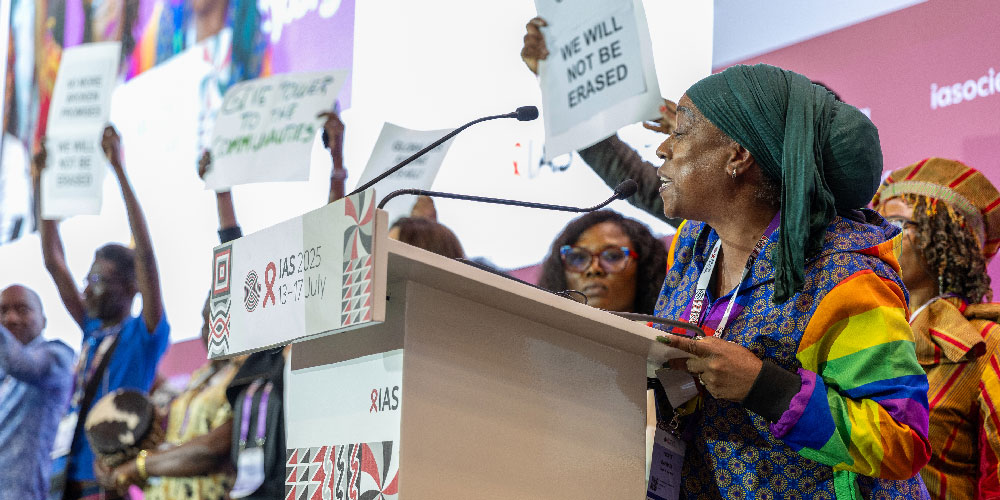
1. The impact of funding cuts
The global funding crisis sparked by the sudden slashing of US aid in early 2025 was a strong thread through IAS 2025. Delegates welcomed bipartisan moves by the US Senate to protect the US President’s Emergency Plan for AIDS Relief (PEPFAR) from USD 400 million in federal funding cuts. But the impact continues to be severe. This was backed up by a host of results presented.
For example, in Mozambique, home to the third highest number of people living with HIV globally, 25% fewer adults initiated ART in February than in February 2024. In Johannesburg, South Africa, where a PEPFAR-funded award was withdrawn in February, HIV testing declined by 8.5%, diagnoses by 31% and ART initiations by 30% from Q1 2024 to Q1 2025. And in Latin America and the Caribbean, 87% of 40 surveyed organizations that received US funding in the past year had funds suspended, with an estimated 156,164 beneficiaries losing access to HIV services.
In its Global AIDS Update 2025, released just before the conference, UNAIDS says 25 of 60 low- and middle-income countries have increased HIV spending from domestic resources. The future of the HIV response, it says, is “nationally owned and led, sustainable, inclusive and multisectoral”, but global solidarity and renewed commitment from funding partners are crucial.
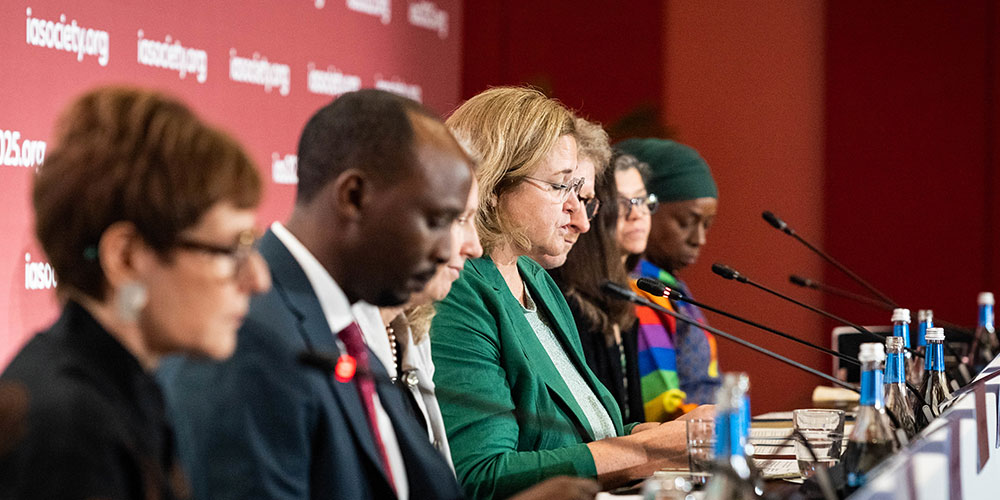
Debt remains crippling for many countries. “You can’t end the AIDS pandemic while African nations must choose between paying creditors and saving lives,” Zackie Achmat, founder of South Africa’s Treatment Action Campaign, told a press conference at IAS 2025. And WACI Health’s Rosemary Mburu asserted in the opening session: “We cannot stretch people to the brink and then praise their strength while denying them support.”

2. Africa at the centre
The African continent does far more than bear the biggest load of the HIV pandemic. IAS 2025 showcased the central role of African science in shaping the global HIV response. IAS 2025 celebrated Africa’s leadership in HIV vaccine research, highlighting African-led scientific innovation, clinical trials and infrastructure development. It introduced the Africa Cure Consortium and its work to advance African leadership in the global effort to develop an HIV cure. Not least, the conference host country, Rwanda, shared the importance of rapid action and global health partnerships in its management of an outbreak of Marburg virus disease, which it declared contained in less than three months.
3. Lenacapavir, the magic word
Data shows that lenacapavir (LEN), injected twice yearly, is almost 100% effective in preventing HIV acquisition. Lenacapavir was the magic word at IAS 2025, with equitable access becoming more urgent amid the funding crisis. Following FDA approval of LEN for HIV prevention, the Global Fund and Gilead Sciences announced an access agreement on the eve of IAS 2025 that will see Gilead supplying doses, at no profit, for up to two million people over three years. And WHO released guidelines recommending use of LEN as an additional choice in combination HIV prevention approaches.
Phase 3 PURPOSE 1 and 2 trial data showed that LEN was efficacious and well tolerated among a broad range of populations, including pregnant and lactating women and adolescents and young people. Three-quarters of PURPOSE 2 participants prefer twice-yearly pre-exposure prophylaxis (PrEP) injections over daily oral medication. The data supported use of LEN for people in special situations, such as those on TB treatment.
4. The growing toolbox of long-acting options
A new addition to the toolbox of long-acting options is MK-8527, an investigational once-monthly oral pill for HIV prevention, with a study showing it is well tolerated in adults. The drug is advancing to Phase 3 trials in Africa.
The first real-world implementation study of long-acting injectable cabotegravir (CAB-LA) for HIV prevention – among adolescent girls and young women in the DREAMS (Determined, Resilient, Empowered AIDS-Free, Mentored, and Safe) programme in Zambia – found that introducing CAB-LA into a trusted HIV prevention programme facilitated uptake and adherence among this population. Participants appreciated that it is discreet with few side effects, and at the second interview, 100% had completed their second dose on schedule.
The Medicines Patent Pool (MPP) and ViiV Healthcare announced a licensing agreement to allow generic production of CAB-LA for HIV treatment for use in combination with rilpivirine in 133 countries, which MPP’s Esteban Burrone described as “a significant step forward for equitable access”.

5. Strides and setbacks in paediatric and adolescent care
Data from the ODYSSEY trial highlight key predictors of treatment failure in children starting ART, including low CD4 percentage, WHO stage 3/4 events and lower weight, supporting targeted screening and tailored support for younger children. Pharmacokinetic modelling supports WHO-aligned weight-band dosing of a new paediatric darunavir/ritonavir fixed-dose combination, expanding age-appropriate treatment options. Early-life administration of two bNAbs (CAP256V2LS and VRC07-523LS) was safe in infants, supporting further investigation into antibody-based strategies to prevent vertical transmission.
In a Zambian facility, suicidal behaviour affected nearly one-third of adolescents living with HIV, driven by stigma, depression and anxiety, underscoring the need for integrated mental health services. And adherence intervention in Zimbabwe using electronic monitoring devices improved viral suppression in young people at risk of virologic failure and was well received. The BREATHER Plus trial in 12-19 year olds living with HIV on TLD saw inferior outcomes in virological rebound in those on short-cycle ART with weekends off ART versus continuous ART.
6. bNAb breakthroughs
Broadly neutralizing antibodies (bNAbs) have a steadily growing role in HIV research, driven by insights from immunotherapy, cure science and vaccine development. Findings showed altered viral rebound dynamics when long-acting bNAbs were combined with immune modulators like N-803. Novel antibody pairingsNovel antibody pairings, targeting the CD4 binding site and interface region, revealed bidirectional antagonism, offering new perspectives on bNAb synergy. CAR-T cells engineered to secrete bNAbs reduced viral load in a humanized mouse model and mediate Fc-effector functions. The combination of lenacapavir alongside dual bNAbs preserved HIV-specific T-cell responses, but did not increase viral antigen expression. These findings underscore how interdisciplinary advances are accelerating the integration of bNAbs into long-term HIV control and cure strategies.

7. Harnessing technology
IAS 2025 sessions showcased communities and programme implementers increasingly drawing on technology for delivery of accessible, efficient and person-centred HIV and other health services. Among many things, in Nigeria, the deployment of mobile digital chest X-ray vans equipped with AI is enhancing efficiency of TB diagnosis and strengthening HIV/TB service integration in primary healthcare.
In Canada, researchers have developed a chatbot called MARVIN that supports HIV self-management by providing knowledge and adherence support. In South Africa, an AI-powered toolkit monitored by clinicians is improving accessibility to HIV prevention, client engagement and service delivery for adolescent girls and young women. And blockchain solutions are improving client adherence by addressing critical challenges in data management in Kenya and pharmaceutical supply chains in Malawi and Ghana.